
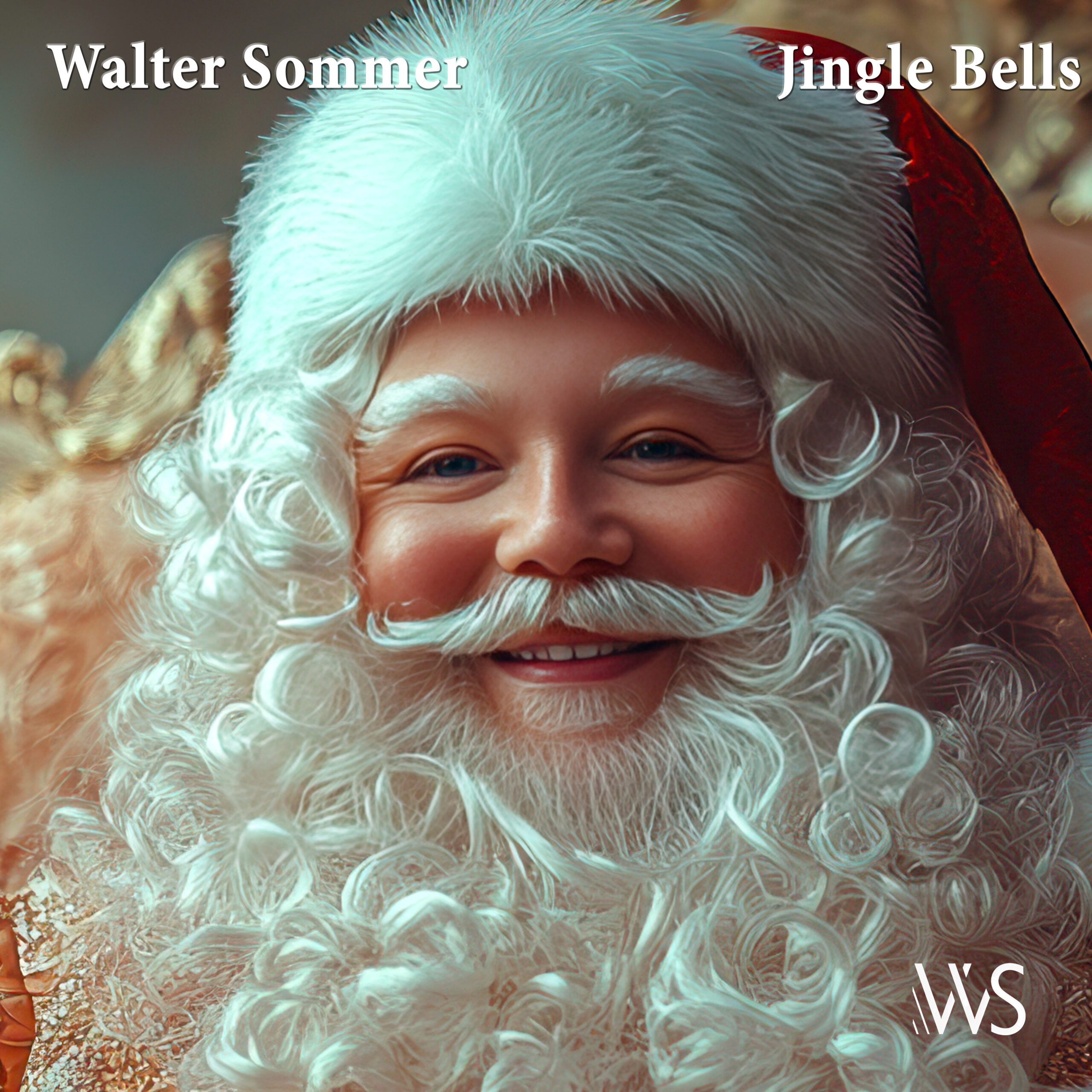
Stream/Download
Amazon
Apple
iHeart
Pandora
Spotify
Tidal (High Definition)
YouTube Music
Composed by Walter Sommer and Tom Libertiny
Performed by Walter Sommer and his Orchestra
Produced, mixed, and mastered by Tom Libertiny
Christmas Series

The history of Christmas music traces back to the early days of Christianity. In the 4th century, Latin hymns like “Veni Redemptor Gentium,” composed by St. Ambrose, were among the earliest songs celebrating the birth of Jesus Christ. These hymns were solemn and liturgical, intended for worship within the church.
During the Medieval period, the tradition of caroling emerged in Europe. Carols were festive songs that combined both religious and folk elements, often performed during communal celebrations. In the 13th century, St. Francis of Assisi popularized Nativity plays with songs in the vernacular, making the Christmas story more accessible to the general populace.
The Renaissance and Baroque eras saw significant contributions to Christmas music from composers like Johann Sebastian Bach and George Frideric Handel. Bach’s “Christmas Oratorio” (1734) and Handel’s “Messiah” (1741), although not exclusively Christmas pieces, became integral to holiday celebrations due to their thematic content.
In the 19th century, the Victorian era sparked a revival of Christmas traditions, including music. Many of the carols known today were written or popularized during this time. For instance, “Silent Night,” originally “Stille Nacht,” was composed in 1818 by Franz Xaver Gruber in Austria. Collections like “Christmas Carols Ancient and Modern” (1833) by William Sandys helped preserve traditional songs and introduced new ones.
Jingle Bells
Jingle Bells is one of the most enduring and widely recognized holiday songs in the world. Composed by James Lord Pierpont in 1857, it was originally titled The One Horse Open Sleigh. The song was published on September 16, 1857, and was initially intended for the Thanksgiving season rather than Christmas.
James Lord Pierpont was born on April 25, 1822, in Medford, Massachusetts. The inspiration for Jingle Bells is commonly attributed to the sleigh races held in Medford during the 19th century. These races were a popular form of entertainment, and the song captures the excitement and thrill of dashing through the snow in a one-horse open sleigh.
The song was first performed at a Thanksgiving church service where Pierpont was the organist and music director. Its lively melody and catchy chorus made it an immediate favorite among congregants. Despite its initial association with Thanksgiving, the song’s themes of winter fun led to its adoption into Christmas traditions.
Over time, Jingle Bells became more closely associated with Christmas due to its winter imagery and joyful tone. By the early 20th century, it had become a staple of Christmas music repertoire in the United States and eventually around the world.

“Away in a Manger” is a traditional Christmas carol that reflects on the humble and serene birth of Jesus Christ in a stable. The lyrics emphasize the simplicity of the scene, with baby Jesus lying peacefully in a manger surrounded by animals. The song often conveys themes of innocence, faith, and comfort, portraying the Christ child as calm and divine, even in modest circumstances.
The carol expresses adoration and love for the newborn Jesus and includes a heartfelt prayer asking for His guidance and presence throughout life. It is commonly sung during Christmas celebrations, especially by children, due to its gentle melody and simple, heartfelt lyrics. The song evokes feelings of peace, humility, and devotion, making it a beloved piece of Christmas tradition.
The carol first appeared in print in 1885 in a Little Children’s Book for Schools and Families, published by the Evangelical Lutheran Church in the United States.
The authorship of “Away in a Manger” is somewhat uncertain and has been debated over time. The carol is often attributed to multiple sources:
- James R. Murray (1841–1905), an American composer and publisher, is credited with popularizing the song. He published it in 1887 in a children’s collection titled Dainty Songs for Little Lads and Lasses. In this publication, he referred to it as “Luther’s Cradle Hymn,” which led to the incorrect belief that Martin Luther, the 16th-century German theologian, wrote it.
- Carl Mueller is sometimes mentioned as the composer of the melody associated with the hymn, though this is also disputed.
- The lyrics’ authorship is anonymous. The first two stanzas appeared in an 1885 publication by the Evangelical Lutheran Church in the United States, but the true author remains unknown. The third stanza (“Be near me, Lord Jesus”) was added later, possibly by John Thomas McFarland in the early 1900s.
Despite the confusion over its origins, “Away in a Manger” remains one of the most beloved carols in the English-speaking world.

The song “Little Drummer Boy” has a fascinating history. It was originally written in 1941 by American composer and teacher Katherine Kennicott Davis. Originally titled “Carol of the Drum,” it was inspired by a traditional Czech carol but was largely an original composition. Davis intended it to be a simple Christmas song suitable for a children’s choir.
The song gained widespread popularity in the late 1950s when it was recorded by the Trapp Family Singers (of The Sound of Music fame). However, its true breakthrough came in 1958, when the Harry Simeone Chorale recorded and released it under the name “Little Drummer Boy.” This version became a massive hit and has since been considered a Christmas classic. Simeone’s arrangement added a choral grandeur and rhythmic “pa-rum-pum-pum-pum” refrains that have become iconic.
“Little Drummer Boy” remains a staple of Christmas music, symbolizing humility, the spirit of giving, and the idea that even the smallest, most heartfelt gifts can be meaningful.

Hark! The Herald Angels Sing has a rich history, starting as a poem written by Charles Wesley in 1739. Wesley, an English Methodist leader and prolific hymn writer, originally titled it “Hymn for Christmas-Day.” His lyrics were solemn and theological, focused on the profound spiritual meaning of Christ’s birth. The opening line was initially “Hark how all the welkin rings,” using the old English word “welkin,” meaning “heavens.”
In 1753, Wesley’s friend and fellow hymn writer George Whitefield altered the line to the more familiar “Hark! the herald angels sing.” This adaptation made the hymn more accessible and celebratory, aligning it with the joyous angelic announcement of Christ’s birth.
The tune we associate with it today came much later, in 1855, when musician William H. Cummings adapted it to a melody from Felix Mendelssohn’s 1840 composition, Festgesang. Mendelssohn had written the piece for the Gutenberg Printing Press’s 400th anniversary, not originally for religious purposes, but Cummings saw its potential to enhance Wesley’s lyrics.
Over time, the carol gained popularity in both England and America, becoming one of the most cherished Christmas hymns. Its evolution—from Wesley’s reflective hymn to a jubilant anthem about the birth of Jesus–illustrates the blending of theology, adaptation, and music that helped it endure across centuries.

“The First Noel” is a traditional English Christmas carol that tells the story of the birth of Jesus. The song describes how, on the first Christmas night, an angel appeared to shepherds watching over their flocks, announcing the birth of Christ. The shepherds, moved by the news, travel to Bethlehem to witness the newborn Savior. The carol celebrates the humble beginnings of Jesus’ life and the joy of His arrival, encouraging all to join in the reverence and praise of this miraculous event. Its melody and lyrics emphasize the simplicity and beauty of the nativity story.
The exact origins of “The First Noel” are uncertain, as it is a traditional English carol that dates back to at least the 16th or 17th century. It is thought to have originated in Cornwall, England, though it was passed down orally, which makes its authorship unknown. The earliest known publication of the song was in 1823, in a book titled “Some Ancient Christmas Carols” by William B. Sandys, who included it in his collection of English folk songs.

The song “Silver Bells” is a beloved Christmas classic written by Jay Livingston and Ray Evans in 1950. Originally titled “Tinkle Bells,” the song’s name was quickly changed after Livingston’s wife pointed out that “tinkle” had an unfortunate connotation.
The song was first performed by William Frawley (better known as Fred Mertz from I Love Lucy) on the set of the film The Lemon Drop Kid, but it gained fame through a performance by Bob Hope and Marilyn Maxwell in the same film, released in 1951.
“Silver Bells” was inspired by the bustling holiday scenes in cities, particularly the sounds of Salvation Army bell ringers on street corners. Its vivid imagery captures the essence of an urban Christmas with lyrics like “city sidewalks, busy sidewalks, dressed in holiday style.”